← All posts

Black beans vs white beans... what's the difference??
By Michelle 路 November 21, 2026 路 3 min read

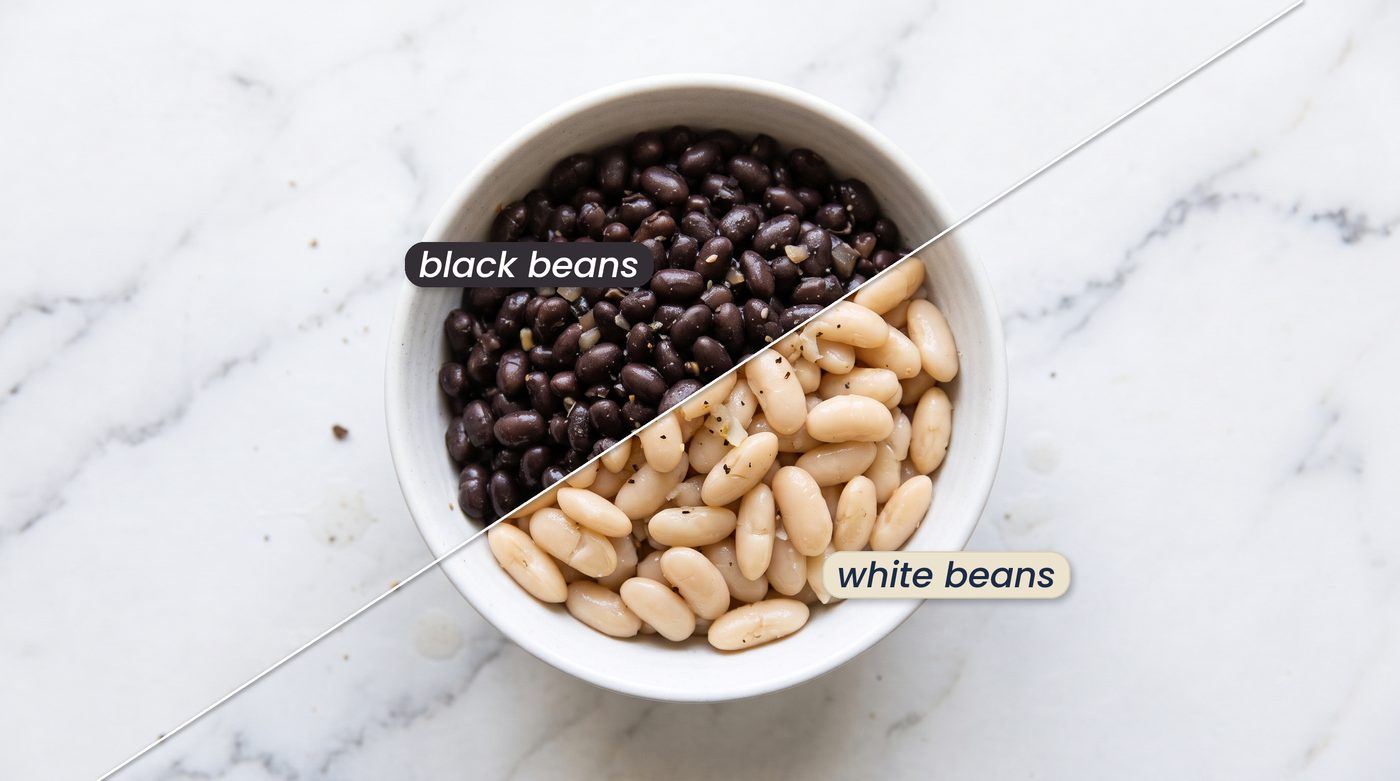
One bowl of cooked beans split by a diagonal line, glossy black beans on one half and creamy white beans on the other, labeled black beans and white beans.
Black beans and white beans are nearly the same calories, protein, and carbs. The real difference is which nutrients each one brings.
Both count as one FoodFlip Carb Portion.

What's actually different?

Black beans
Legume · Carb Portion
  • More fiber and folate than white beans
  • Firmer bean that holds its shape, with an earthy, slightly sweet flavor
  • At home in tacos, burrito bowls, and chili
White beans
Legume · Carb Portion
  • More iron, potassium, and calcium than black beans
  • Creamier and softer, with a mild flavor that soaks up seasoning
  • At home in soups, stews, and blended dips

Nutrition differences, side-by-side

Per 1 Carb Portion (~120 calories, about 1/2 cup cooked), from dried, no fat or salt added.

 Black beansWhite beans
Amount92 g87 g
Calories120120
Protein8.1 g8.4 g
Total carbohydrate22 g22 g
of which fiber7.9 g (28% DV)5.5 g (20% DV)
Fat0.5 g0.3 g
Folate129 mcg (32% DV)66 mcg (17% DV)
Magnesium64 mg (15% DV)55 mg (13% DV)
Iron1.9 mg (11% DV)3.2 mg (18% DV)
Potassium323 mg (7% DV)485 mg (10% DV)
Calcium25 mg (2% DV)78 mg (6% DV)
Highlighted cell is the higher of the two, where more is meaningful. Values rounded. DV is percent of the FDA Daily Value for an adult.

What jumps out

馃珮
Black beans bring more fiber
At the same calories, black beans have about 7.9 g of fiber (28% of a day) and white beans about 5.5 g (20%). Both are real fiber, black beans just bring a bit more.
馃尶
Black beans lead on folate
One Portion of black beans has about 129 mcg of folate (32% DV) versus 66 mcg in white beans (17% DV), close to double. Folate supports healthy red blood cells.
馃挭
White beans lead on iron, potassium, and calcium
White beans carry more iron (3.2 mg vs 1.9 mg), more potassium (485 mg vs 323 mg), and more calcium (78 mg vs 25 mg) than black beans at the same calories.
鈿栵笍
Calories, protein, and carbs are a tie
Both are one Carb Portion at about 120 calories, roughly 8 g of protein, and 22 g of total carbohydrate. The real difference is the minerals and the texture, not the macros.

Easy ways to use them

  • 馃尞Black beans hold their shape, so they shine in tacos, burrito bowls, and a pot of chili.
  • 馃嵅White beans go creamy as they cook, perfect for soups, stews, and minestrone.
  • 馃ィBlend white beans into a smooth, protein-rich dip or spread.
  • 馃Toss either one cold into a salad for an easy fiber and protein boost.

The bottom line

Black beans and white beans are both fiber- and protein-rich beans with almost the same calories and carbs, so they swap in and out of a dish easily. It really comes down to which minerals you want and the texture you like.

  • Choose black beans when you want more fiber and folate, a firmer bean that holds its shape, and that earthy flavor for tacos, bowls, and chili.
  • Choose white beans when you want more iron, potassium, and calcium, a creamier, softer bean, and a mild flavor for soups and dips.

There is no wrong pick here, both are a great Carb Portion. Reach for whichever fits the dish, or keep both in the pantry and rotate.

In FoodFlip terms

A cupped handful of cooked beans, black or white, is 1.0 Carb Portion 1.0 C (about 1/2 cup cooked, around 120 calories). Beans bring protein too, but in FoodFlip a legume counts as a Carb.

For a balanced meal, add 1.0 P (a palm of protein) + 1.0 V (a cup of veggies) + 1.0 F (~1 Tbsp oil).

Want a plan built for you?

Custom FoodFlip Portions, simple recipes, and a community that cheers you on.
Get my plan

More from the blog

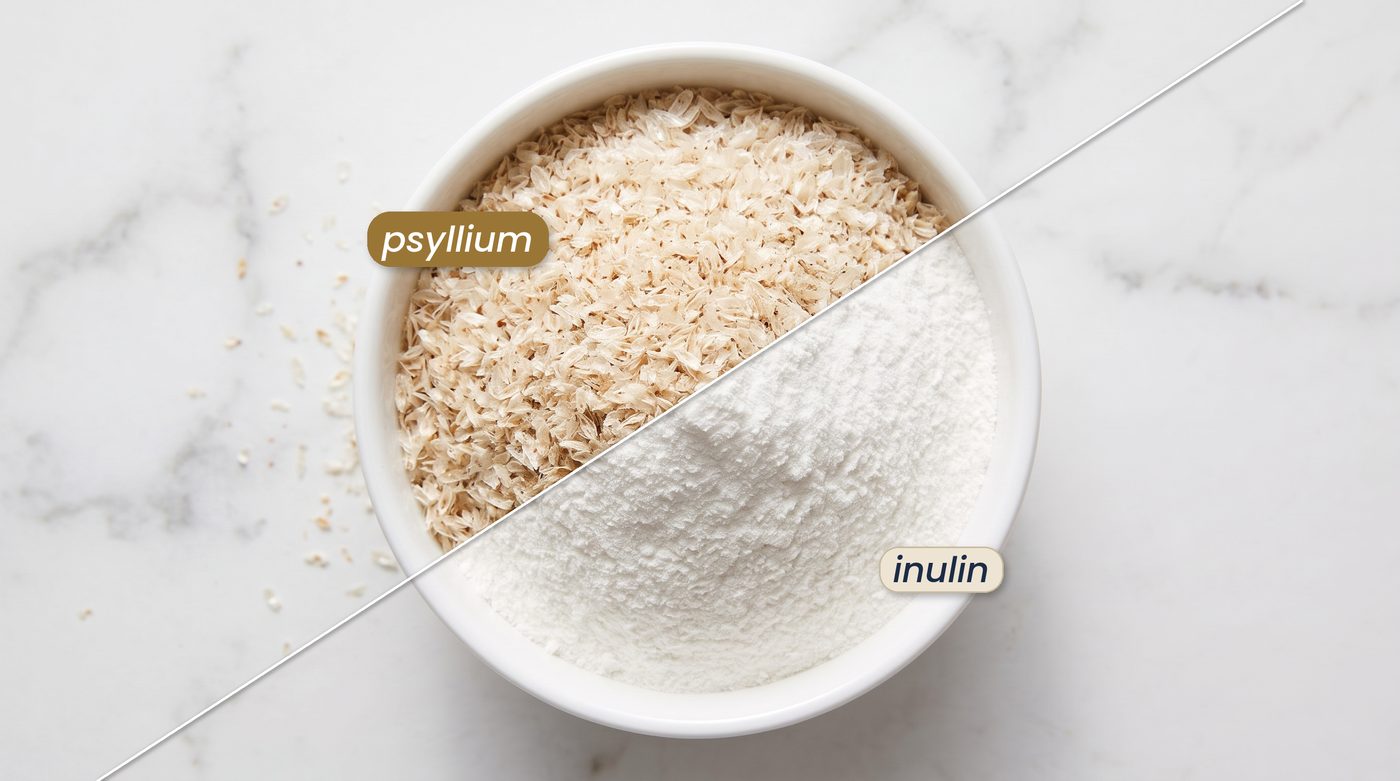
Psyllium vs inulin... what's the difference??

Psyllium (the fiber in Metamucil) and inulin (chicory root fiber) are both soluble fiber, but they do opposite jobs. Psyllium soaks up water into a thick gel that bulks and softens stool, lowers cholesterol, and causes little gas. Inulin is a prebiotic that your gut bacteria ferment, so it feeds your microbiome but is the one more likely to cause bloating. Here's the side-by-side, plus why inulin hides in so many packaged 'high fiber' foods.

November 22, 2026 路 3 min read

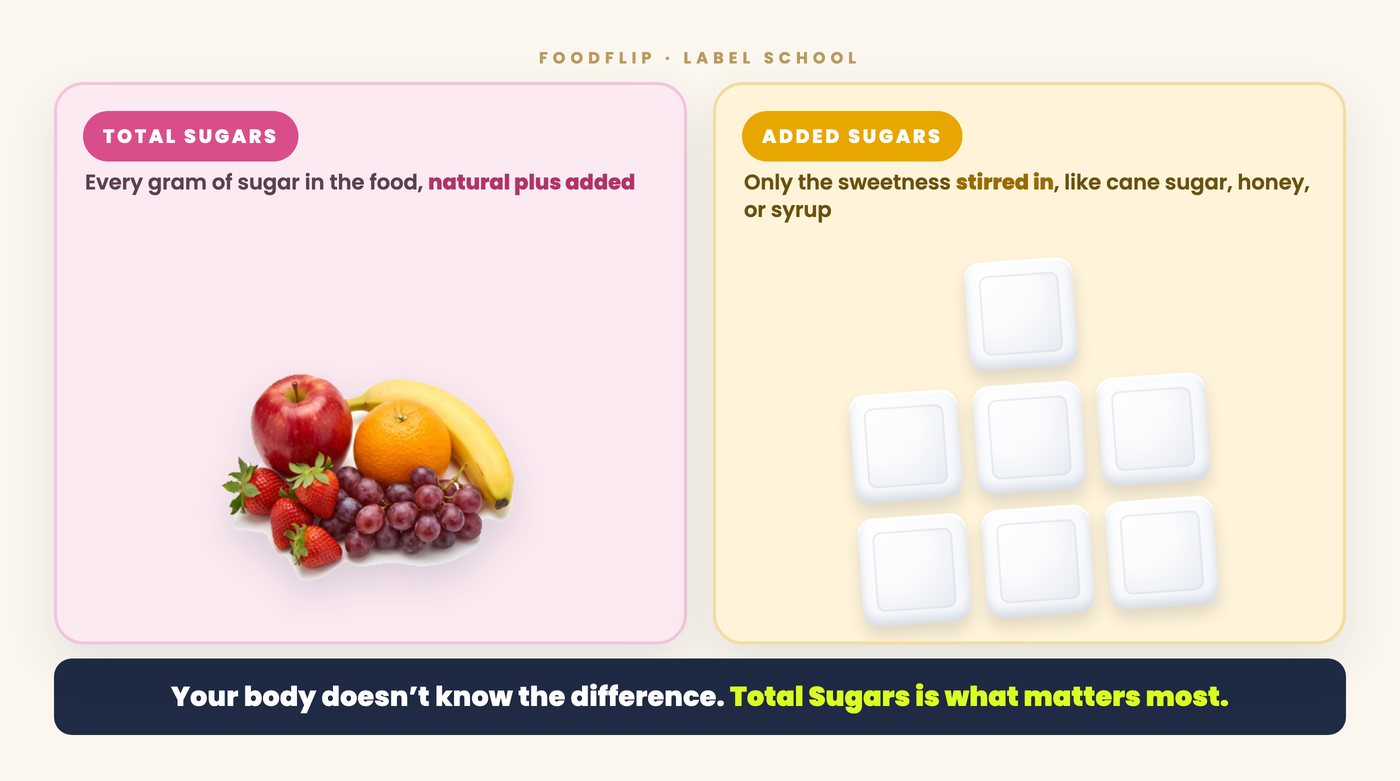
Total sugar vs added sugar... what's the difference??

Total sugar and added sugar are not two separate things. Added sugar is just the part of the total that someone stirred in, like cane sugar, honey, or syrup, while total sugar also counts the natural sugar in fruit, milk, and juice. Your body treats all of it the same, so Total Sugars is the number that matters. Here's the difference in plain terms, plus why a 'no added sugar' smoothie can still pack 49 grams of sugar.

November 21, 2026 路 3 min read

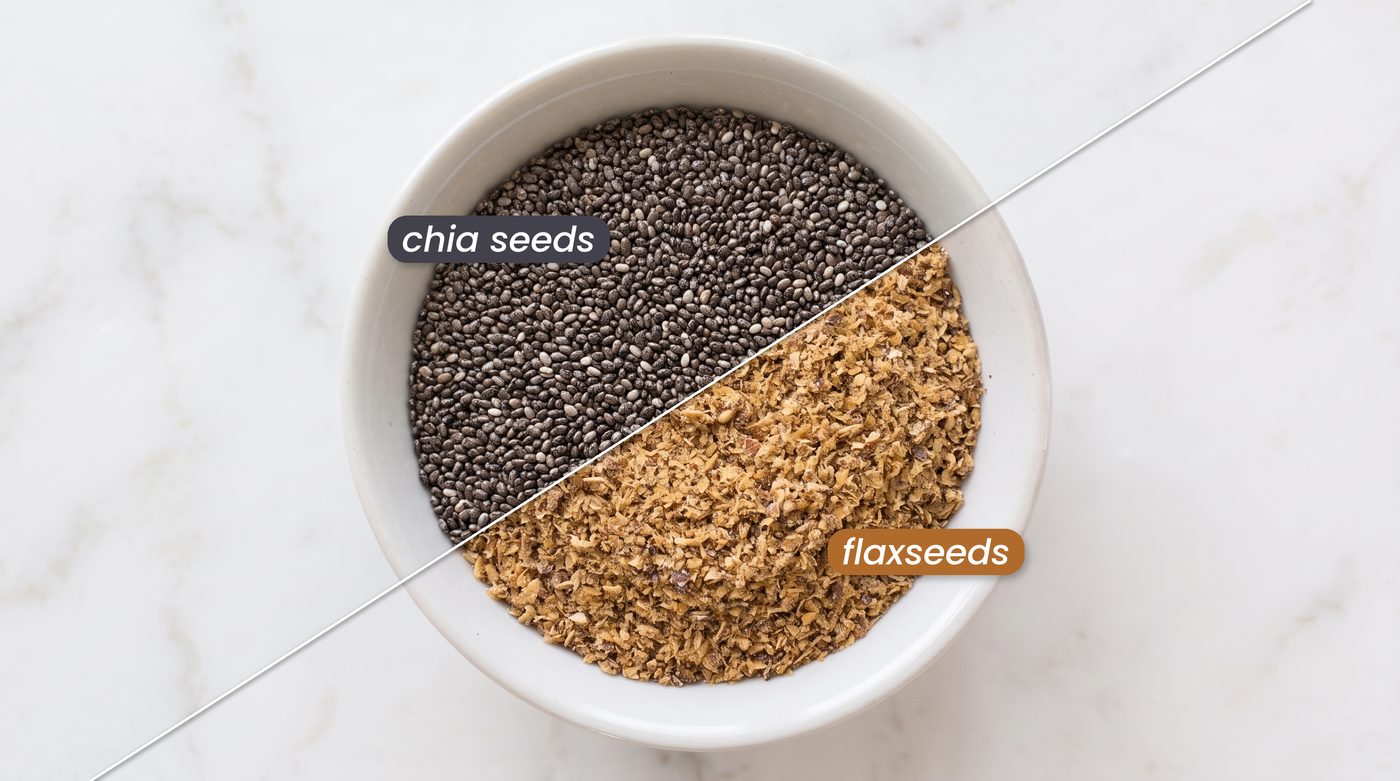
Chia seeds vs flaxseeds... what's the difference??

Chia seeds and flaxseeds are both tiny fiber and omega-3 powerhouses, and both count as a Fat Portion. The everyday difference is how you use them: chia digests fine whole, while flaxseeds have to be ground so your body can absorb them. Here's the side-by-side at one Fat Portion (135 calories): chia brings more fiber and calcium, the omega-3 is a tie, and flax is the seed to reach for when you want lignans.

November 21, 2026 路 3 min read