← All posts

Full-fat vs reduced-fat mozzarella... what's the difference??
By Michelle 路 November 26, 2026 路 3 min read

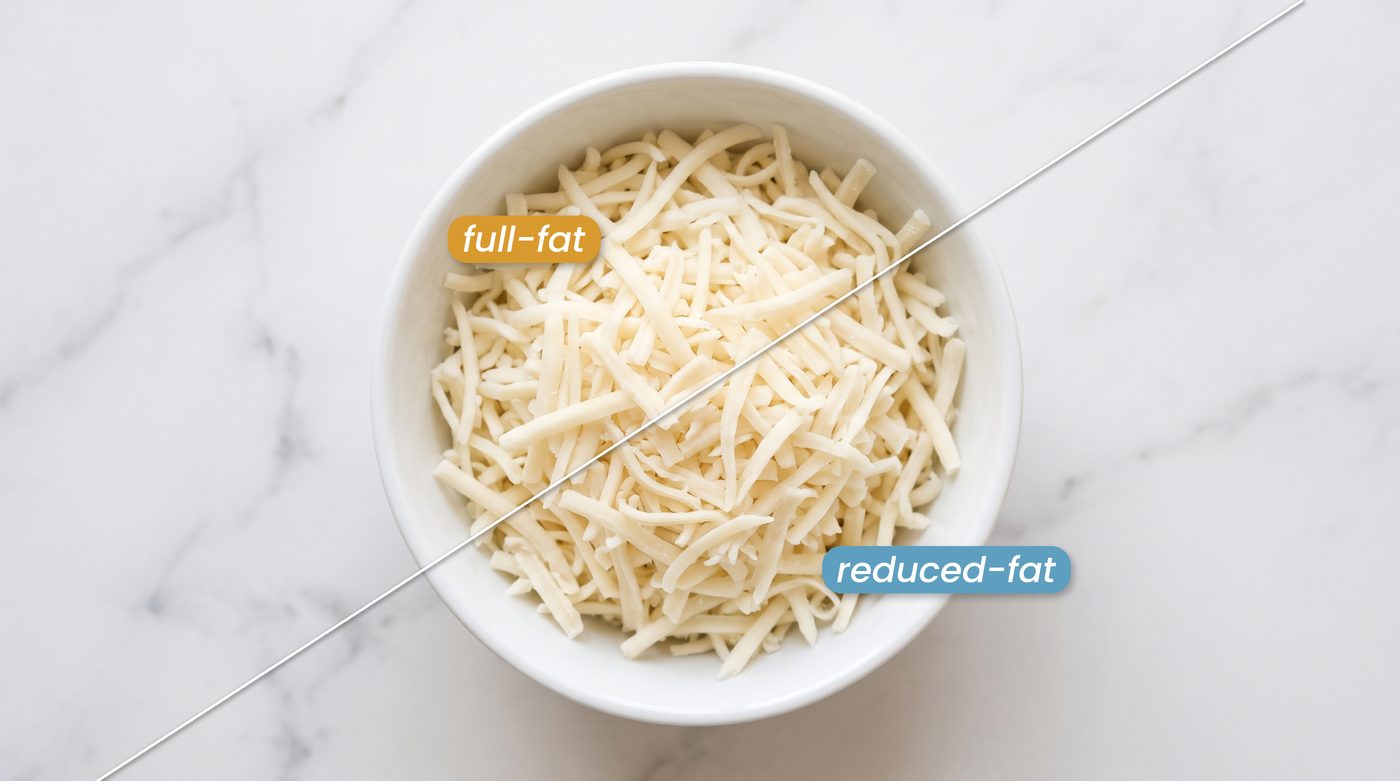
A bowl of shredded low-moisture mozzarella split by a diagonal line, labeled full-fat on one half and reduced-fat on the other, to show they look identical.
Reduced-fat mozzarella isn't a different cheese. It's regular mozzarella made with part-skim milk, so by law it has at least 25% less fat per serving than full-fat.
Both are a Fat in FoodFlip, and they melt onto the same meals.

What's actually different?

Full-fat mozzarella
Whole milk
  • Made with whole milk, so full-fat mozzarella keeps all of the milkfat.
  • About 7 g fat and 4.5 g saturated fat per ounce.
  • Melts gooier and stretchier, with a richer flavor, and browns well.
Reduced-fat mozzarella
Part-skim · "reduced fat" claim
  • Made with part-skim milk, which is why reduced-fat mozzarella carries at least 25% less fat.
  • About 4.5 g fat and 2.5 g saturated fat per ounce, plus a touch more protein.
  • Still melts, but it is a little firmer and less stretchy, and browns less.

Nutrition differences, side-by-side

Per 1 oz (28 g, about 1/4 cup shredded), the standard serving on both labels. In FoodFlip, an ounce of cheese is a Fat.

 Full-fatReduced-fat
Amount28 g28 g
Calories9070
Protein6 g7 g
Total carbohydrate1 g1 g
Fat7 g4.5 g
of which saturated4.5 g2.5 g
Calcium185 mg (14% DV)190 mg (15% DV)
Sodium180 mg (8% DV)190 mg (8% DV)
Highlighted cell is the higher of the two, where more is meaningful. Values rounded from USDA data and typical labels (whole-milk and part-skim low-moisture shredded mozzarella). DV is percent of the FDA Daily Value for an adult.

What jumps out

馃搹
"Reduced fat" is an FDA rule, not a vibe
To print "reduced fat" on the label, the FDA requires at least 25% less fat per serving than the regular version, and the package has to name what it is compared to, like "less fat than regular mozzarella." It is a measured claim.
鈿栵笍
Reduced fat is not the same as low fat
"Low fat" is its own FDA claim, meaning 3 g of fat or less per serving. Reduced-fat mozzarella still has about 4.5 g per ounce, so it is lower in fat than full-fat, but it is not technically "low fat."
馃
The melt is the trade-off
Fat is what makes cheese stretch and go gooey, so full-fat mozzarella melts creamier and browns better. Reduced-fat mozzarella still melts, but it is a bit firmer and can turn rubbery if you overcook it.
馃挭
Protein and calcium hold up
Taking out the fat does not take out the protein or calcium. Per ounce, reduced-fat mozzarella actually has a little more protein, about 7 g vs 6 g, and about the same calcium as full-fat.

Easy ways to use each one

  • 馃崟Reach for full-fat when melt and stretch are the star, like homemade pizza or a baked pasta you want extra gooey.
  • 馃Reach for reduced-fat for everyday shredding, on eggs, in a wrap, over a casserole, or on a quesadilla, where you want the cheese flavor with less fat.
  • 馃敟With reduced-fat, melt it low and slow and pull it off the heat sooner so it stays soft instead of rubbery.
  • 馃Either one freezes well shredded, so buy whichever is on sale and keep a bag in the freezer.

The bottom line

Full-fat and reduced-fat mozzarella are the same cheese, just made with different milk. Neither one is off-limits, it just comes down to what the meal needs.

  • Choose full-fat mozzarella when melt, stretch, and richness are the point, like pizza night or a baked pasta you want extra gooey.
  • Choose reduced-fat mozzarella when you want to lighten the fat and saturated fat on an everyday meal and still keep the protein and calcium.

There is no bad mozzarella here. Pick the one that fits the meal in front of you, and enjoy the cheese.

In FoodFlip terms

In FoodFlip, cheese is a Fat. A 1 oz sprinkle (about 1/4 cup shredded) of full-fat mozzarella is about 1.0 F, and the same sprinkle of reduced-fat mozzarella is about 0.5 F. Cutting the fat literally cuts the Portion.

Build the rest of the plate with 1.0 P (a palm of protein) + 1.0 V (a cup of veggies) + 1.0 C (a cupped handful of pasta or rice).

Want a plan built for you?

Custom FoodFlip Portions, simple recipes, and a community that cheers you on.
Get my plan

More from the blog

Psyllium vs inulin... what's the difference??

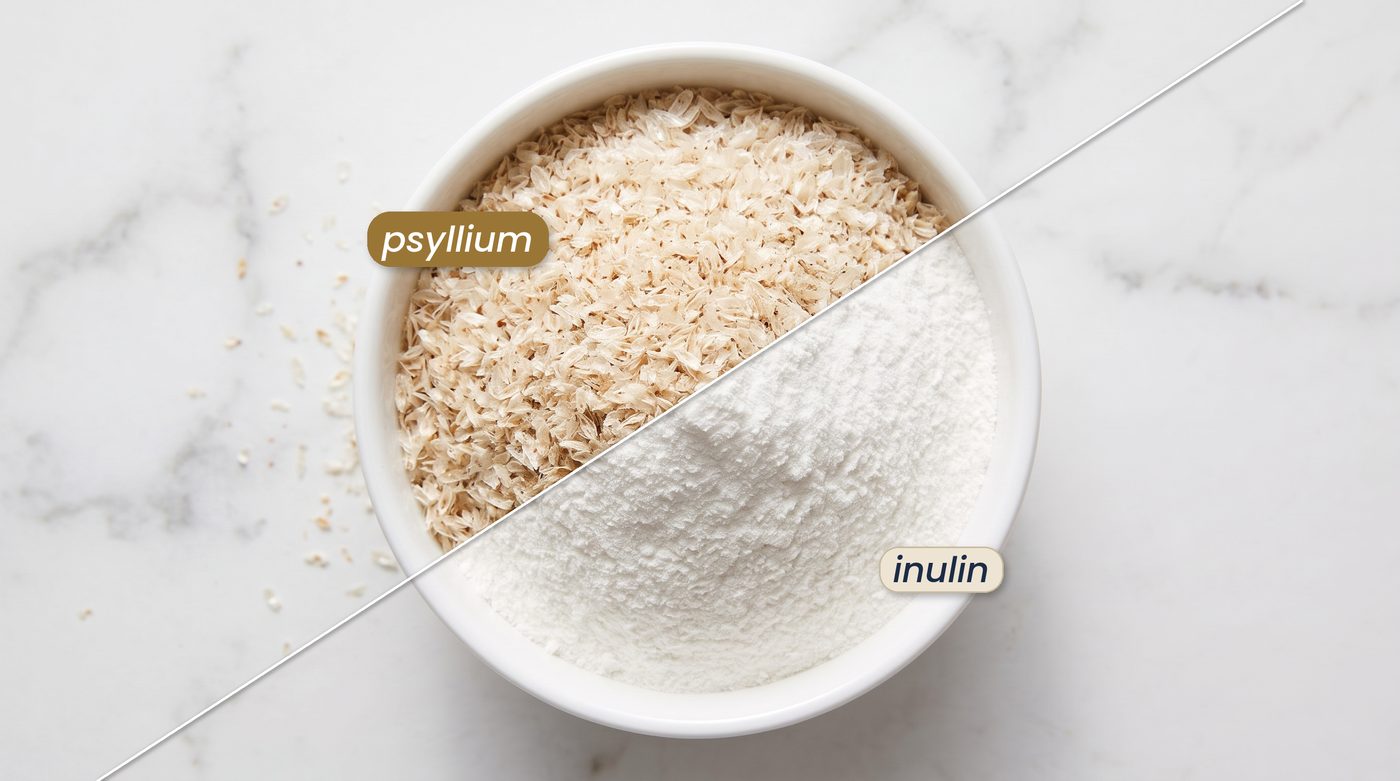
Psyllium (the fiber in Metamucil) and inulin (chicory root fiber) are both soluble fiber, but they do opposite jobs. Psyllium soaks up water into a thick gel that bulks and softens stool, lowers cholesterol, and causes little gas. Inulin is a prebiotic that your gut bacteria ferment, so it feeds your microbiome but is the one more likely to cause bloating. Here's the side-by-side, plus why inulin hides in so many packaged 'high fiber' foods.

November 22, 2026 路 3 min read

Black beans vs white beans... what's the difference??

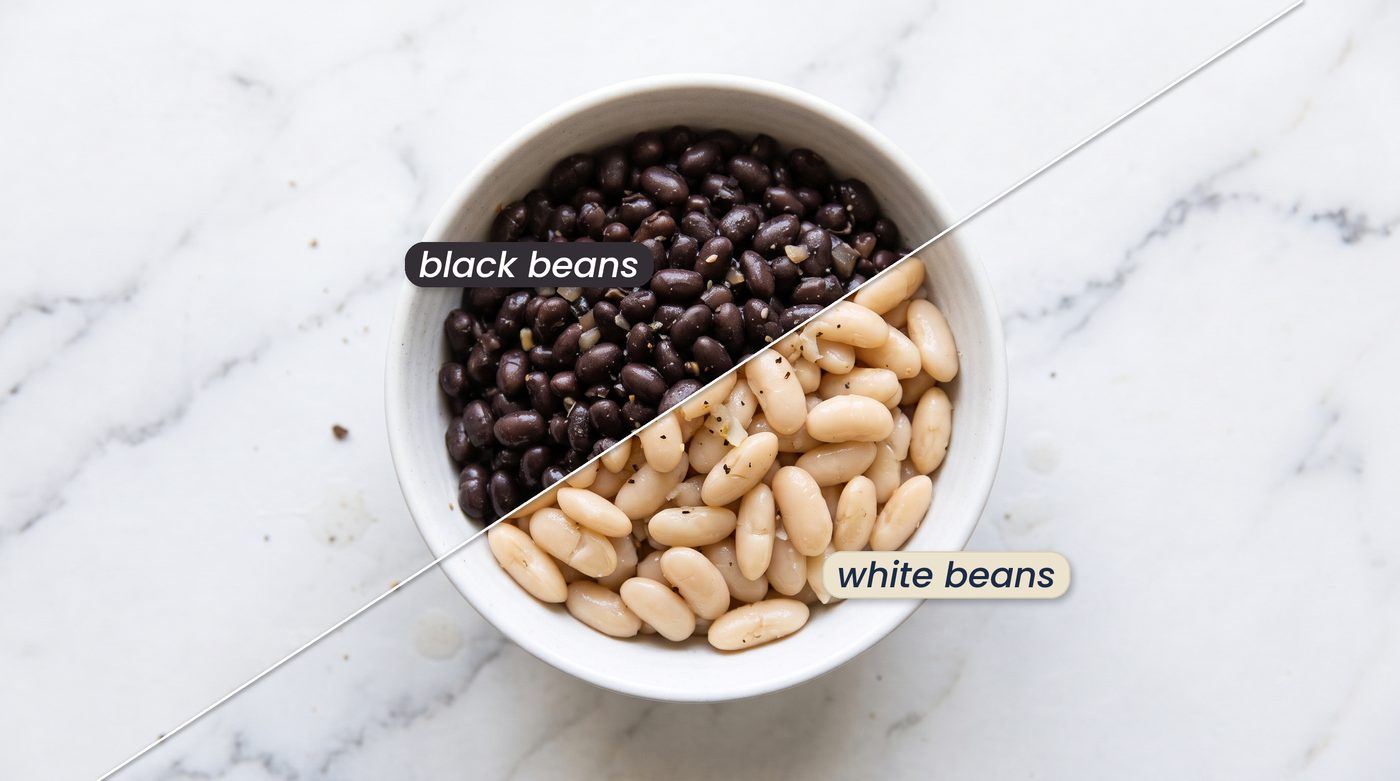
Black beans and white beans are nearly the same calories, protein, and carbs, and both count as one FoodFlip Carb Portion. The real difference is the minerals: black beans bring more fiber and folate, while white beans bring more iron, potassium, and calcium. Here's the side-by-side at one Carb Portion (about 1/2 cup cooked), plus the texture difference, black beans stay firm while white beans go creamy.

November 21, 2026 路 3 min read

Chia seeds vs flaxseeds... what's the difference??

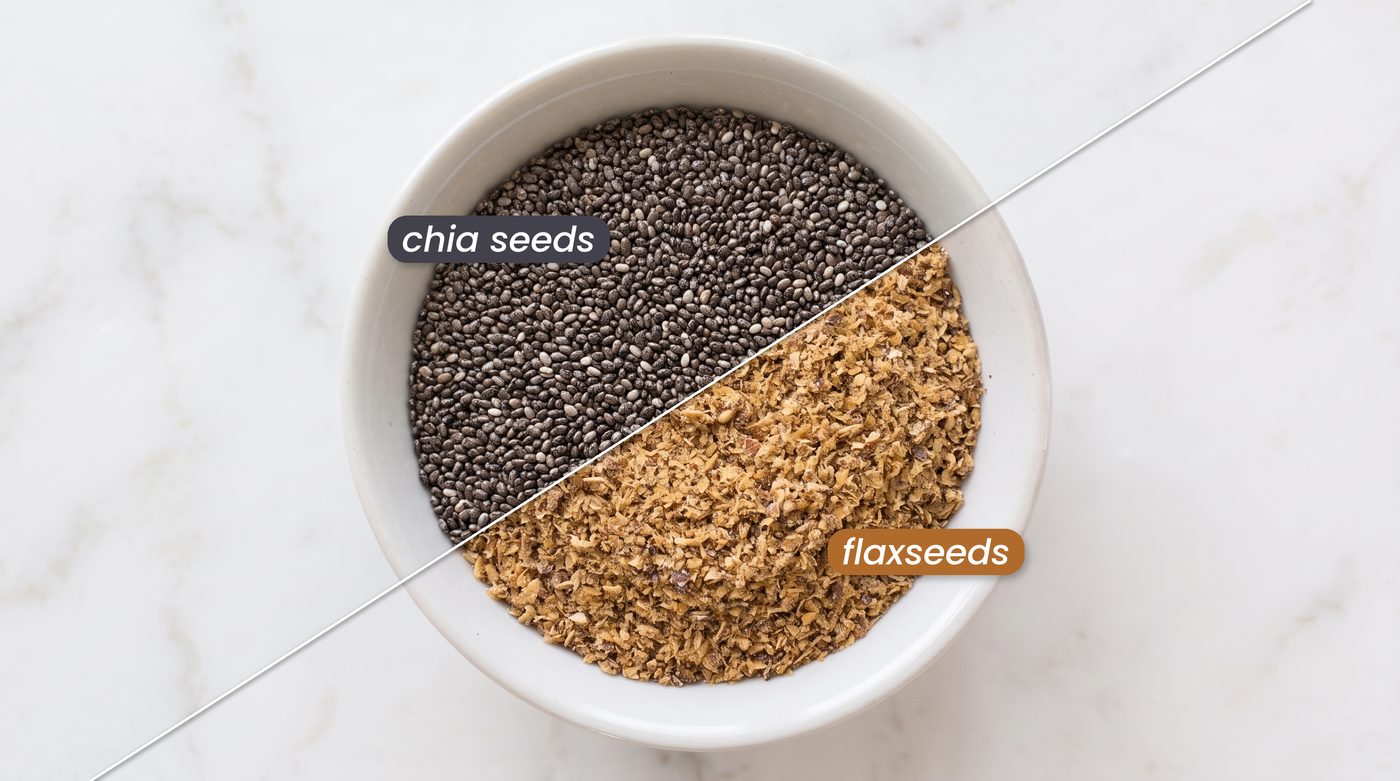
Chia seeds and flaxseeds are both tiny fiber and omega-3 powerhouses, and both count as a Fat Portion. The everyday difference is how you use them: chia digests fine whole, while flaxseeds have to be ground so your body can absorb them. Here's the side-by-side at one Fat Portion (135 calories): chia brings more fiber and calcium, the omega-3 is a tie, and flax is the seed to reach for when you want lignans.

November 21, 2026 路 3 min read